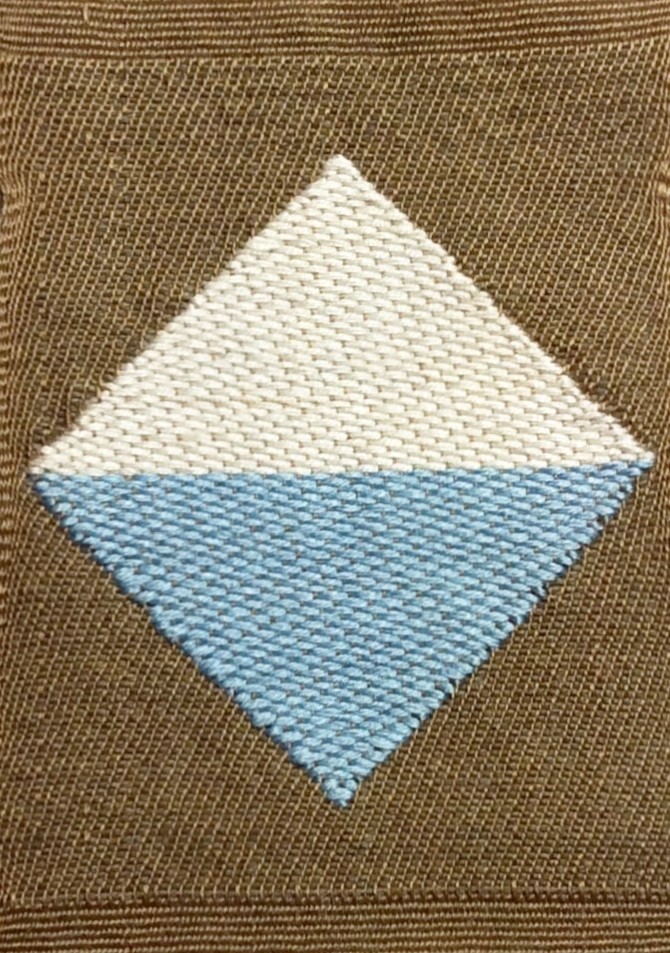
28th Battalion, Australian Imperial Force, 29th July 1916
Synopsis of Life and Military Service
Early Life in Moray
James Alexander McDonald was born at Glenrinnes, near Dufftown, Banffshire, on 18 March 1887. He was the second son of John McDonald, a joiner, and his wife Isabella Glass or McDonald, daughter of Charles Glass.
James was educated at Dufftown Public School and was subsequently employed in Morayshire. Before leaving Scotland aged around 24 years old, he had gained four years of military experience with the 6th Volunteer Battalion, Gordon Highlanders.
A New Life in Australia
In April 1911, James left Scotland for Australia, where he settled and found employment. His occupation is variously recorded as a wood cutter and, at the time of his enlistment, as a mill hand.
On 15 February 1915, with the First World War already well underway, he volunteered for service with the Australian Imperial Force at Blackboy Hill, Training Camp, Western Australia.
He was single and approaching his 28th birthday when he enlisted. He was allocated the service number 133 and became a Private in the 28th Battalion, 7th Brigade, Australian Imperial Force.
His enlistment papers described him as:
- Height: 5 feet 6 inches.
- Weight: 140lbs.
- Chest measurement: 34 to 37 inches.
- Hair: Fair.
- Eyes: Blue.
- Complexion: Fair.
- Religion: Presbyterian.
The 28th Battalion
The 28th Battalion was raised at Blackboy Camp in Western Australia on 16 April 1915. Its recruits had originally been earmarked for the 24th Battalion, but that battalion was instead raised in Victoria.
The 28th Battalion left Australia in June 1915 and, following approximately two months of training in Egypt, was sent to Gallipoli.
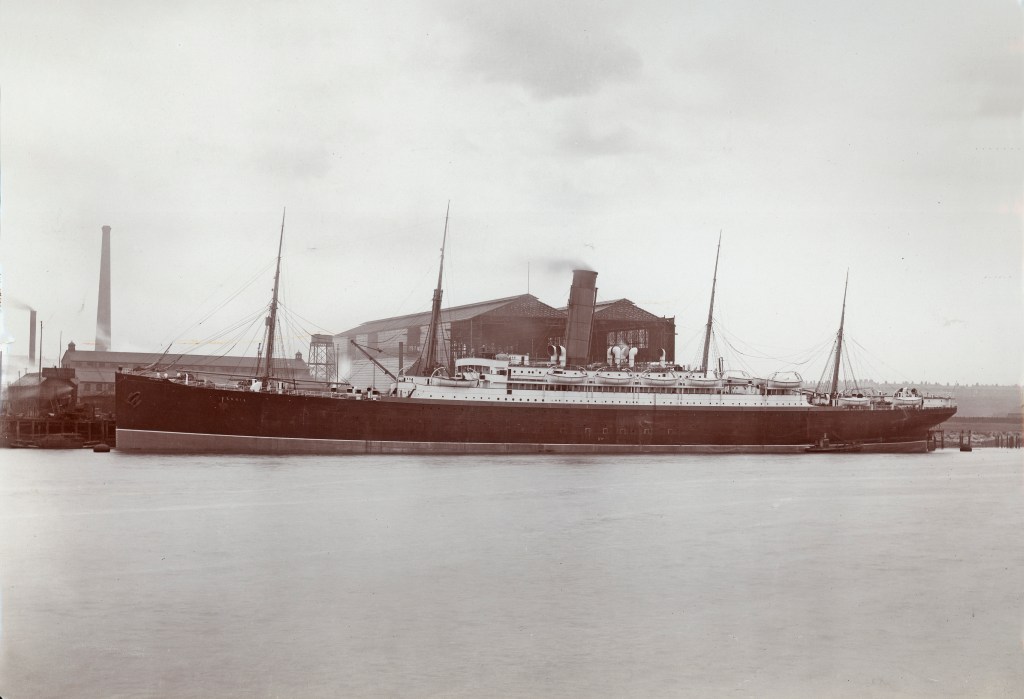
James embarked for Gallipoli aboard the SS Ivernia on 4 September 1915.
The 28th Battalion formed part of the 7th Brigade, which was sent to reinforce the exhausted New Zealand and Australian Division on the Gallipoli peninsula. The battalion landed there on 10 September 1915.
Compared with many of the formations which fought during the Gallipoli campaign, the 28th Battalion experienced a relatively quiet period on the peninsula and suffered comparatively light casualties.
The battalion remained at Gallipoli until the evacuation in December 1915.
From Gallipoli to the Western Front
Following the withdrawal from Gallipoli, James and the 28th Battalion returned to the eastern Mediterranean. On 10 January 1916, he disembarked at Mudros, Greece.
After another period in Egypt, the 7th Brigade, as part of the 2nd Australian Division, was ordered to France to join the fighting on the Western Front.
On 16 March 1916, James proceeded to join the British Expeditionary Force. Five days later, on 21 March, he disembarked at Marseilles.
His arrival in France was quickly followed by a short period of illness. On 29 March 1916, James was admitted to No. 2 Casualty Clearing Station suffering from influenza. Fortunately, his illness was not serious and he returned to his unit on 1 April.
Over the following months, the 28th Battalion became accustomed to conditions on the Western Front. By July 1916, however, it was about to become involved in its first major battle in France.
The Battle of Pozières
Pozières was a small village in the Somme valley, but during the summer of 1916 it became the scene of some of the most bitter and costly fighting experienced by the Australian Imperial Force during the First World War.
The village was initially captured by the Australian 1st Division on 23 July 1916. Having taken Pozières, the Australians were subjected to almost continuous German artillery fire and repeated counter-attacks.
The 1st Division held its gains, but at an enormous cost. By the time it was relieved on 27 July, the division had suffered 5,285 casualties.
The Australian 2nd Division, which included James’s 28th Battalion, then took over the line.
The 28th Battalion was therefore entering its first major battle on the Western Front at one of the most dangerous points on the Somme battlefield.
The 2nd Division mounted two further attacks. The first, on 29 July, was a costly failure. A second attack on 2 August succeeded in capturing further German positions beyond the village. The Australians were then subjected to intense retaliatory bombardments.
By the time the 2nd Division was relieved on 6 August, it had suffered 6,848 casualties.
The Australian 4th Division subsequently entered the line at Pozières. It too endured massive German artillery bombardments and, on 7 August, defeated a German counter-attack. This proved to be the final German attempt to recapture Pozières.
Missing in Action
It was during the opening stages of the 2nd Division’s involvement at Pozières that James disappeared.
His Australian service records state that on 29 July 1916 he was reported missing in action.
There was initially no certainty as to what had happened to him. His fate remained unresolved for several months, and it was not until January 1917 that his death was officially confirmed. Even then, the precise circumstances surrounding his death remained unknown.
No Known Grave
James’s body was either never recovered from the battlefield or, if recovered, could not subsequently be identified.
As a result, he has no known grave.
Private James Alexander McDonald, No. 133, 28th Battalion, Australian Imperial Force, is commemorated on the Villers-Bretonneux Memorial, Somme, France, which commemorates Australian soldiers who died in France and have no known grave.
Born in the small Moray community of Glenrinnes in 1887, James had travelled halfway around the world to begin a new life in Australia. Four years after leaving Scotland, he volunteered for military service. His wartime journey took him from Western Australia to Egypt, Gallipoli, Greece and finally France.
Having survived the Gallipoli campaign and a bout of influenza shortly after reaching France, he was lost during the devastating fighting at Pozières in July 1916.
He was 29 years of age.
28th Battalion, Australian Imperial Force War Diary
28 and 29 July 1916
28 July 1916 – 6pm: Battalion marched to positions of deployment for the attack on German Trenches OG1 and OG2, NORTH of POZIERES. Battalion was in position in four waves ready for the advance by 11.30 p.m.
29 July 1916 – At 12.10 a.m. enemy opened up a heavy fire with H.E. (High Explosive), shrapnel and machine guns causing a number of casualties. Our artillery placed a heavy barrage fire on enemy trenches. As soon as this lifted the men rushed forward in perfect order and were met with heavy fire from rifles and machine guns and artillery. The first wave was held up by the enemy’s wire which was intact and very strong. The four waves reached the wire and unavailing effects were made to find openings or make them in the face of intense machine gun fire. Heavy casualties resulted. A very intense artillery barrage of the enemy’s prevented any reports of the situation getting through and it was not until 2.5 a.m. that orders for withdrawal could be delivered. From this hour onward the men were withdrawn and ordered to return to SAUSAGE VALLEY. Lieutenant Colonel Collett was wounded, three company commanders killed and severely wounded and 8 other officers killed or wounded. About 11 a.m. the battalion marched to TARA Hill to bivouac.
Casualties for July;-
- Killed: 5 Officers / 58 Other Ranks.
- Wounded: 6 Officers / 145 Other Ranks.
- Missing: 1 Officer / 256 Other Ranks.
Family
James McDonald was born on 18 March, 1887 at Glenrinnes, Dufftown, Banffshire. The following family information is taken from the 1901 Census and ‘Lives of the First World War website. At the time of the 1901 Census, the family were residing at 28 Conval Street, Dufftown.
His family is shown as follows :-
- Father: John McDonald, born c.1858 at Cromdale, Elginshire – Joiner.
- Mother: Gabella Glass or McDonald, born c.1864 at Mortlach, Dufftown.
- Sister: Annie Jane, born 10 April 1884 at Glenrinnes, Banffshire – Nurse (Domestic).
- Brother: Charles George, born 25 September 1885 at Glenrinnes, Banffshire.
- Sister: Isabella McDonald or Shand, born 25 October 1890 at Glenrinnes, Banffshire.
- Brother: George Lobban, born 30 March 1891 at Grange, Banffshire.
- Brother: William, born 27 September 1892 at Grange, Banffshire.
- Sister: Catherine Margaret Sim McDonald or Webster, born 19 November 1895 at Grange, Banffshire.
- Brother: Malcolm, born 4 March 1897 at Grange, Banffshire.
- Sister: Alice, born 11 December 1898 at Mortlach, Banffshire.
- Sister: Helen, born 6 December 1900 at Mortlach, Banffshire.
His brother William was killed in action on the 31st July 1917 as part of the 9th Gordon Highlanders.
Addresses
The following addresses have been ascertained for
- 1901: 28 Conval Street, Dufftown, Banffshire. (Census)
- 1915: Ballintomb Cottage, Dulnain Bridge, Grantown-on-Spey. (Fathers Address)
- 1917: Rowan Cottage, Dulnain Bridge, Grantown-on-Spey. (Fathers Address)
- 1921: Relugas, Dunphail Estate, near Forres, Morayshire. (Parents address)
Medals
James Alexander McDonald was awarded the 1914-15 Star, Victory and the British War Medals for his service in the Great War.
Memorials
James Alexander McDonad is honoured and remembered on the following memorials:-

Links to Additional Information
- Commonwealth War Graves Commission: James Alexander McDonald.
- Lives of the First World War: James Alexander McDonald.
- A Street Near You website : James Alexander McDonald.
- Find a Grave: James Alexander McDonald.
- Morayshire Roll of Honour: James Alexander McDonald.
- Australian National Archive – Service Record: James Alexander McDonald.
- WW1 Lives website: Brother – William
References
- Morayshire Roll of Honour.
- Commonwealth War Graves Commission.
- De Ruvigny’s Roll of Honour.
- Army Service Record – Australian National Archives.
- War Diary: 28th Battalion.
Groups
Contributors:-
- Vincent Stuart

