1st Coldstream Guards, 3 November 1914
Synopsis of Life and Military Service
Edward Joseph Parker
Early Life
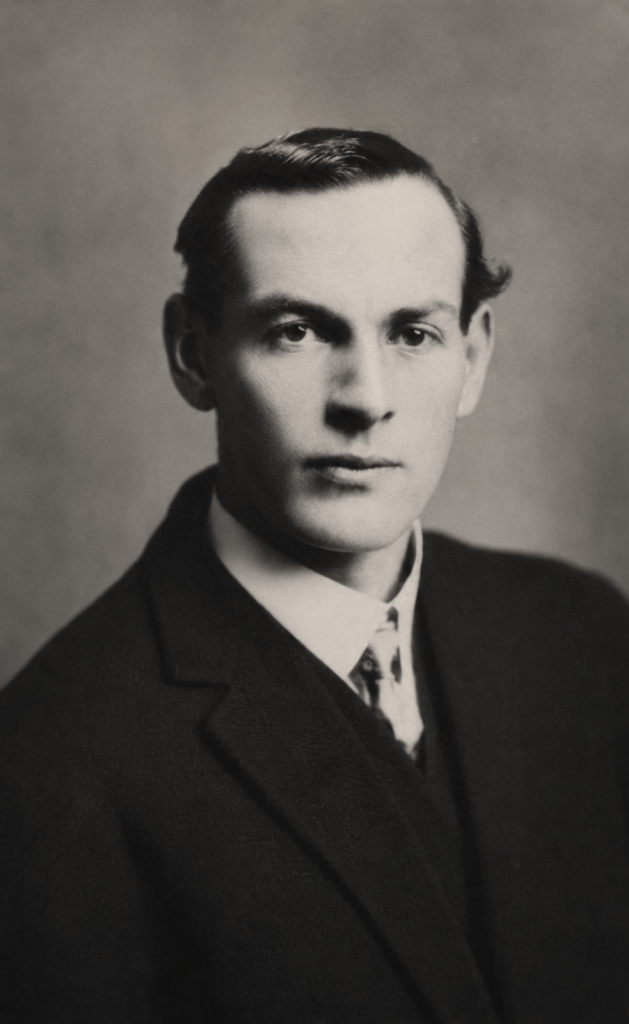
Edward Joseph Parker was born on 26 January 1882 at Dunchurch, Warwickshire. In the early days of his working life, he was employed as a labourer. In the 1901 Census, he is shown as being an apprentice painter and on 7 August 1901 he enlisted at Northampton as Private, 4316, in the Coldstream Guards. After 3 years service, on 6 August 1904, he was discharged from the army and transferred to the Reserve.
Edward later established a career on the railways, where the employment documents state that he was 5 feet 10 inches tall . He joined the London & North Western Railway on 17 August 1905 and became a foreman shunter and brakeman at Rugby.
Marriage and Family
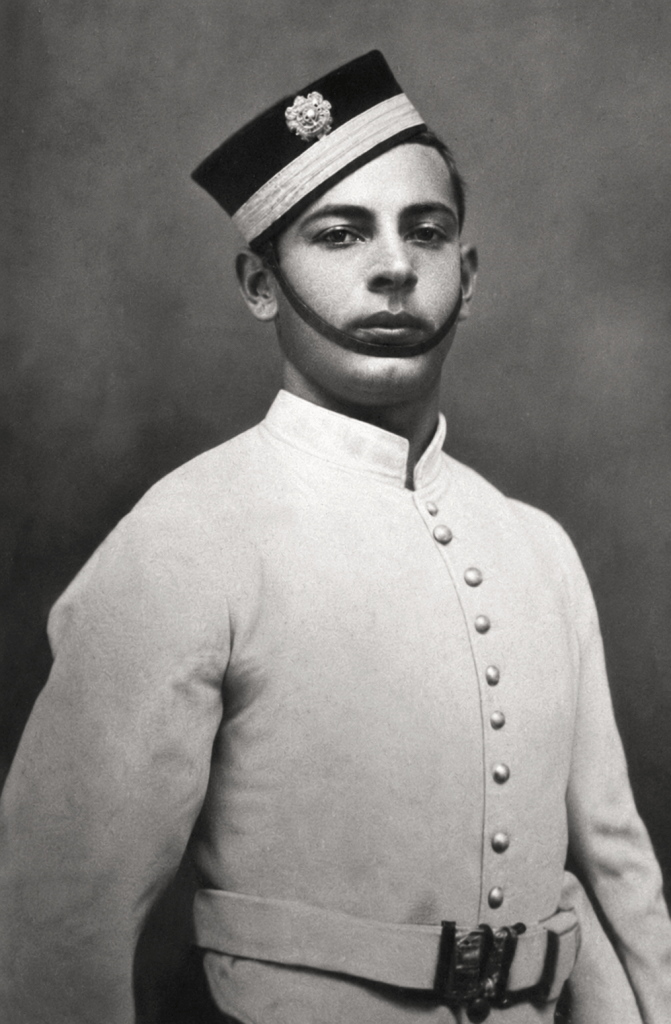
On 12 September 1908, Edward married Nellie May Hancock at Holy Trinity Church, Rugby. The couple settled in Rugby and had twin children, a son, Edward and daughter, Nellie, born of 14 September 1909 at Rugby.
Return to Colours
As a Reservist, Edward was recalled to the Colours immediately following the outbreak of the First World War in August 1914. Serving with the 1st Battalion Coldstream Guards, he entered the France and Flanders theatre of war on 30 August 1914 as part of the original British Expeditionary Force.
His award of the 1914 Star with clasp and roses confirmed that he had served under enemy fire during the dangerous opening months of the war.
Battle of Langemarck
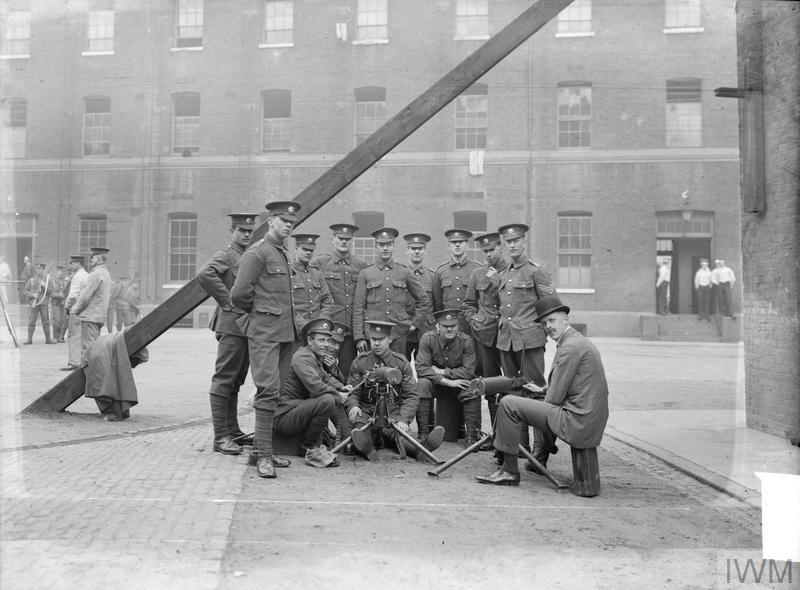
On 21 October 1914, the 1st Battalion Coldstream Guards took part in the fighting near Poelcapelle during the opening stages of the Battle of Langemarck, part of the wider First Battle of Ypres.
Acting as the advance guard, the battalion came under intense German fire and suffered heavy casualties before successfully holding their ground against repeated enemy counter-attacks.
The Fighting at Gheluvelt
Only days later, the battalion was heavily engaged again during the desperate fighting around Gheluvelt between 27 and 29 October 1914.
The Guards were rushed to the area to reinforce a line under severe pressure from German attacks. Holding trenches with little support, they faced assaults launched through thick mist by the 16th Bavarian Reserve Infantry Regiment, at times allowing the enemy to advance within fifty metres of the British position.
The battalion suffered severe casualties during the fighting, including the death of their commanding officer, Major The Hon. Leslie D’Henin Hamilton MVO. It was likely during either the fighting at Langemarck or Gheluvelt that Ernest Parker received the wounds from which he later died.
Final Days
Ernest was evacuated to No. 13 Stationary Hospital, which had been established in the “Sugar Sheds” on the Gare Maritime docks, Boulogne, where doctors and nurses attempted to save his life.
Despite the terrible conditions at the front, his letters home had remained cheerful and optimistic. Early in November 1914, Mrs Parker received a letter from a nurse at the hospital:
“Your husband has been very badly wounded, and I am very much afraid he will not recover. He wished to send a message to you just to say he had been wounded and was anxious to get well for your sake and the babies’, and to send his love.”
Edward Parker died of wounds at 1.45 p.m. on 3 November 1914.
The Rev. Hedley R. Burrows, Chaplain to the Forces, later wrote to his widow:
“I was with him just about an hour before the end and gave him the Blessing. He gave me your address and sent his love to you and the children. The doctors and nurses worked with great skill and devotion to save his life.”
Remembered in Rugby
His death was reported in the Rugby Observer on 13 November 1914, which described him as being:
“well-known and greatly esteemed both in Rugby and at Dunchurch his native place.”
The newspaper also recorded the moving words of his widow, Nellie May Parker:
“It was his duty to go, and I would not have made a coward of him.”
Resting Place
Private Edward Joseph Parker is buried with honour at Boulogne Eastern Cemetery, Pas de Calais, France, among the many soldiers who lost their lives during the opening months of the Great War.
Rugby Observer dated 13 November 1914
ROLL OF HONOUR
Rugby Man’s Last Thoughts.
On Saturday Mrs. E.J. Parker, of 19, Corbett Street, Rugby, received intimation that her husband, Lance-Corporal E.J. Parker, of the Coldstream Guards, had died at the Base Hospital at Boulogne as the result of wounds received in battle.
Mr. Parker, who was only a young man, had been employed for ten years on the London and North West Railway at Rugby, and for some time past had held the position of foreman shunter. He was well-known and greatly esteemed both in Rugby and at Dunchurch his native place.
Being a Reservist, he was summoned to rejoin his regiment on the outbreak of war, and immediately proceeded to the front. He wrote a number of letters to his wife from various places in France, and these are characterised by a spirit of the utmost cheeriness and confidence. At the beginning of the month (November 1914) Mrs. Parker received the following letter from a nurse at the base hospital :-”Your husband has been very badly wounded, and I am very much afraid he will not recover. He wished to send a message to you just to say he had been wounded and was anxious to get well for your sake and the babies’, and to send his love.”
On Saturday Mrs. Parker received the following letter from the Rev. Hedley R. Burrows, chaplain to the Forces :- “Dear Mrs. Parker, – You will have heard by now that your husband has been taken to his rest. He died here of his wounds at 1.45 p.m. on November 3rd (1914). I was with him just about an hour before the end and gave him the Blessing. He gave me your address and sent his love to you and the children. The doctors and nurses worked with great skill and devotion to save his life. I hope you will be comforted in your great loss and sustained by the sense of the power that Christ will bring to all those who suffer in the faithful discharge of their duty. No act of duty done is ever forgotten or thrown away.”
Lance-Corporal Parker leaves a widow and two young children, a little boy and girl, each five years of age. “I would not have kept him back.” said Mrs. Parker. “It was his duty to go, and I would not have made a coward of him.”
Family
Edward Joseph Parker was born 26 January 1882 at Dunchurch, Rugby, Warwickshire. The following family information is taken from the 1891, 1901, 1911 Census and his Pension Card.
His family is shown as follows :-
- Wife: Nellie May Hancock or Parker, born 31 October 1882 at Buerton, Oxfordshire.
- Daughter: Nellie May, born 14 September 1909 at Rugby.
- Son: Edward Charles, born 14 September 1909 at Rugby.
- Father: Thomas Parker, born c.1854 at Wappenbury, Warwickshire. Farm Stockman.
- Mother: Elizabeth Parker, born c.1850 at Thurlaston, Warwickshire.
- Brother: Henry G., born c.1875 at Easthorpe, Warwickshire. Bricklayers Labourer.
- Brother: Alfred W., born c.1877 at Dunchurch, Warwickshire.
- Sister: Harriet, born c.1879 at Dunchurch, Warwickshire.
- Brother: John, born c.1885 at Dunchurch, Warwickshire. Farm Yardman.
- Sister: Mary V., born c.1887 at Dunchurch, Warwickshire.
Addresses
The following addresses have been ascertained for Edward Joseph Parker :-
- 1891: Dunchurch Village, Rugby, Warwickshire.
- 1901: Dunchurch Village, Rugby, Warwickshire.
- 1908: 365 Clifton Road, Rugby, Warwickshire.
- 1911: 19 Corbett Street, Rugby Warwickshire.
- 1914: 19 Corbett Street, Rugby Warwickshire.
Medals
Edward Parker was awarded the 1914 Star and Clasp, Victory and the British War Medals for his service in the Great War.
Memorials
Edward Joseph Parker is honoured and remembered on the following memorials :-
- St. Peters Church: St. Peters Road, Rugby, Warwickshire, CV21 3QP.
- Dunchurch with Thurlaston Roll of Honour: St Peter’s Church, The Square, Dunchurch, Warwickshire, CV22 6PE.
- Dunchurch and Thurlaston War Memorial: The Square, Dunchurch, Warwickshire, CV22 6NU.
Although he is not specifically named on the following memorial, his service with the London and North Western Railway means that he is also commemorated by it.
- Rugby L. & N.W.R. Employees: Colas Rail Depot, Mill Road, Rugby, Warwickshire, CV21 1BE.
Remarks
Some documentation and correspondence stated that he held the rank of lance-corporal. However, this rank remains unconfirmed, although he may at some point have held it temporarily, which could explain the family’s belief.
On 8 July 1916, the widows pension for Nellie was discontinued on the grounds of being unworthy. A WWI widow’s pension was discontinued for “unworthy conduct” if she failed to meet strict moral and social standards imposed by the Special Grants Committee, aiming to ensure she was “respectable.” Common reasons included cohabitation, having an illegitimate child, drunkenness, or child neglect. The pension was meant for dependent, virtuous widows, not for support in a new relationship or lifestyle deemed improper.
In later Pension Cards her children are shown as having differing guardians, namely H. Townsend and Emily Wilburn. It appears that Nellie married at a later date and went on to have additional children.
Links to Additional Information
- Commonwealth War Graves Commission: Edward Joseph Parker.
- Find a Grave website: Edward Joseph Parker.
- A Street Near You website: Edward Joseph Parker.
- Lives of the First World War: Edward J. Parker.
References
- Commonwealth War Graves Commission.
- Medal Roll, Victory and British War Medals: Coldstream Guards. (Ancestry)
- Soldiers Died in the Great War. (Ancestry)
- Medal Index Card. (Ancestry)
- De Ruvigny’s Roll of Honour – Vol 2, page 244. (Ancestry)
- London and North Western Railway Records. (Ancestry)
- Dunchurch Baptism Records. (Ancestry)
- Warwickshire Church of England Marriages. (Ancestry)
- 1891 Census. (Ancestry)
- 1901 Census. (Ancestry)
- 1911 Census. (Ancestry)
- Register of Soldiers Effects. (Ancestry)
- National Army Museum: Information on WW1 Pensions.
- Pension Cards. (Western Front Association)
- The Rugby Observer dated 13 November 1914 page 3. (British Newspaper Archive).
- Parish of Dunchurch Baptism Records 1882. (Find My Past)
- Coldstream Guards Enlistment Record 1901. (Find My Past)
- Coldstream Guards Death Records 1914. (Find My Past)
Groups
Contributors:-
- Vincent Stuart. (Main Story)

