1st Battalion, Duke of Cornwall’s Light Infantry, 8 May 1917

Synopsis of Life and Military Service
Francis (Frank) Crossman was born 29 November 1883 at 35 Upper High Street, Taunton, Somerset, the son of James Crossman and Bridget Snow or Crossman. His father served in the military—a vocation subsequently adopted by Frank and several of his brothers, suggesting a strong familial tradition of military service.
Details of Frank’s early life remain limited. By the time of the 1901 Census, his mother was recorded as a widow, and Frank, then a young man, was employed as a silk worker. During this period, Taunton supported a modest but notable silk industry, with numerous residents engaged in textile production. Although the specific firm for which Frank worked is unknown, James Pearsall & Co. Ltd. maintained a significant presence in the town and may have been his employer.
Following this period, Frank appears to have entered military service, as contemporary reports of his death state that he had previously served overseas in South Africa and Bermuda—assignments likely tied to Britain’s imperial engagements during the early 20th century.
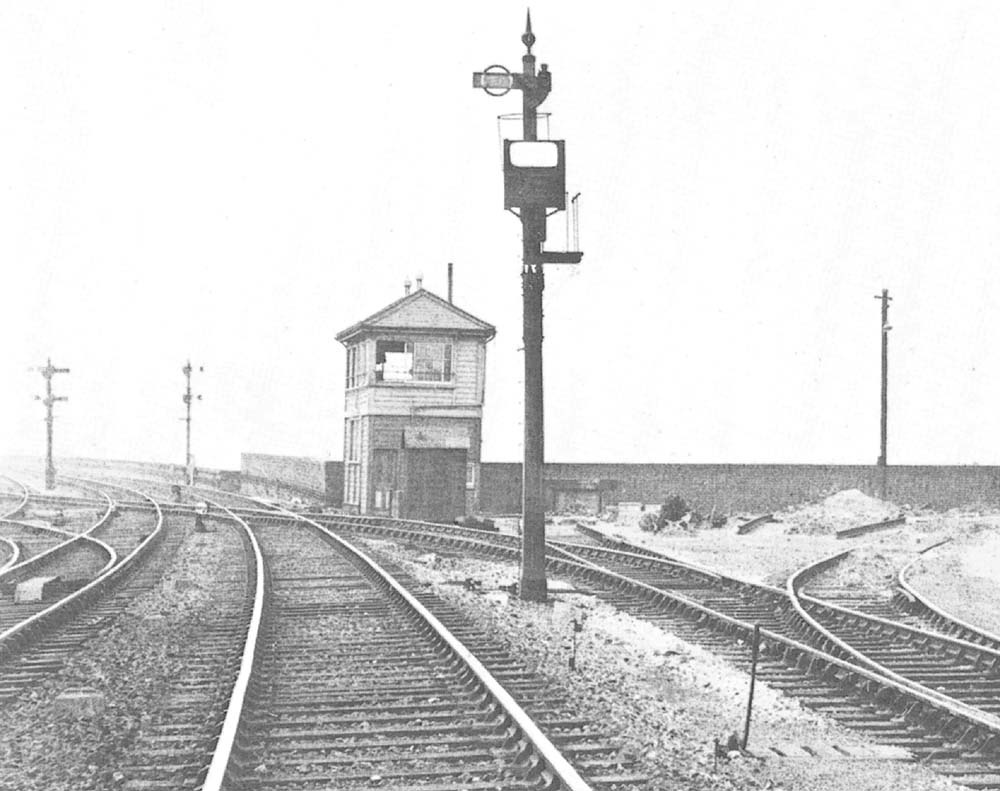
By approximately 1910, Frank had taken up civilian employment with the Great Western Railway, working as a labourer in the Signal Department and based in his native Taunton. This role continued until the outbreak of the First World War. As a reservist, he was promptly recalled to military service and was among the earliest troops re-enlisted for active duty, enlisting at Taunton. He disembarked in France on 21 August 1914, just 17 days after Britain’s declaration of war.
During the initial phase of the war, Crossman saw action and was wounded—likely during the Battle of Mons or the subsequent strategic withdrawal. His service during this crucial early engagement later entitled him to the 1914 Star with clasp, awarded to those who had come under fire in the opening months of the conflict.
At some point thereafter, he was attached, in an as-yet-unclear capacity, to the 5th Divisional Training School before returning to his original battalion.
On 8 May 1917, Frank Crossman was killed in action. His death occurred shortly after his unit’s involvement in the Third Battle of the Scarpe, part of the broader Arras Offensive in the Pas-de-Calais region. On that day, German forces launched a counter-offensive targeting Fresnoy, Arleux, and Arleux Wood. Though Fresnoy was ultimately lost or heavily contested, Allied forces succeeded in holding Arleux and Arleux Wood. The day’s fighting resulted in significant casualties, among them Private Frank Crossman.
His body was either not recovered or remained unidentified, and as a result he is commemorated on the Arras Memorial, Pas-de-Calais, France, which honours those who fell in the region and have no known grave.
Frank’s personal effects and pension were bequeathed to his sister, Annie Crossman (later Bowker), who was named as his sole legatee.
The Devon and Somerset News
Extract from the above publication dated 7 June 1917 :-
FORMER G.W.R. SIGNALLER KILLED
Lance-Corporal F. Crossman, of the D.C.L.I., who was killed in action on the 8th May, was for four years before the war employed in the signalling department of the G.W.R. at Taunton, and was much respected by his comrades and friends. He was recalled to the colours at the outbreak of war, having previously served in South Africa and Bermuda. He went to the Front with the original Expeditionary Force and got wounded in the retreat from Mons. He had a brother, James Crossman, a 1st Class Stoker, who was drowned in the Dardanelles in May, 1915. A younger brother, a sergeant in the D.C.L.I., who was wounded and gassed last August, is a present in a London hospital. The father of these soldiers was the late Sergeant J. Crossman, of the Somerset Light Infantry, who used to be stationed at Taunton Depot.
War Diary – 1st Duke of Cornwall’s Light Infantry
The War Diary of the 1st Duke of Cornwall’s Light Infantry on the date of Frank’s death reads the following :-
8 May 1917
3.45 a.m. – Heavy enemy artillery barrage started growing in intensity until 4 – 5 a.m. when his infantry commenced to attack, the S.G.S. being sent up along the whole divisional front and also northwards in the 2nd Canadian Divisional area. The 95th Infantry Brigade were distributed as follows:- In the front line were the 1st EAST SURREYS on the right and the 12th GLOSTERS on the left, the dividing line between the battalions being roughly on line running through the middle of FRESNOY WOOD from SOUTH WEST to NORTH EAST. A and B Company’s , 1st D.C.L.I. were in support on the right, occupying a well dug trench on the south eastern side of ARLEUX WOOD. C and D companies 1st D.C.L.I. were in support on the left. ‘D’ Company occupying an old German trench running from T29 B7.8 to T 30 0 55.60. and ‘C’ Company the ARLEUX LOOP trench from T 29 D 18 to B 5 M 66. Battalion Headquarters also in the ARLEUX Loop at B 5. C.79.
The 1st DEVONS were in reserve just in rear of FARBUS WOOD. Some indications of the impending storm had manifested themselves on the preceeding day. The enemy had shown a more than ordinary dislike to the appearance of any of our aeroplanes in the vicinity of his lines, a careful and supplicated registration of all our front line trenches and back area had been carried out by his artillery , and psychologically the atmosphere was changed with premonitions of some swiftly approaching menace.
The first attack proved unsuccesful the SURREYS and GLOSTERS repelling it without much difficulty. The Second however which followed closely met with more success. The SURREYS drove them back in front of them, but the GLOSTERS somewhat shaken by seeing large numbers of Canadians moving rearwards and imagining that their left flank was now exposed though these retiring Canadians were only men who had been relieved during the night, promptly broke and the enemy poured into the gap.
The left flank of the EAST SURREYS was now in possession of the enemy this unfortunate regiment fondly imagining that their comrades on the left were still holding out and being unable to verify it, owing to the misty nature of the weather suddenly found themselves surrounded by the enemy, and were practically annihilated. The enemy were now in complete possession of FRESNOY and FRESNOY WOOD.
On the left flank acting under the orders of Officer Commanding 12 Glosters, Captain Kendall M.C. commanding ‘D’ Company 1st D.C.L.I. organised a counter attack with his company and a few of the 12th GLOSTERS. This attack skilfully and resolutely had reached the front support trenchs but were unable to advance further, the tempest of shells, rifle and M.G. fire proving too strong, the remains of the company were therefore withdrawn to their original position. Lieutenant STEPHENSON and many of the rank and file being killed. Frequent appeals had been made for the artillery to put down a protective barrage but in vain; the welcome sustained song of our shells clearing the air as they hasten to their deadly work did not materialise. It appears that during the night 7 / 8th May the Canadian Artillery had been relieved by the 5th Divisional artillery and the guns handed over were mostly not in a workable condition owing to the mechanism of the trench blocks becoming burned.
The storm centre now shifted to the right where nothing remained to stop the enemy taking ARLEUX WOOD except A and B companies in their deep, narrow, well dug trench and a part of the K.O.S.B.’s a little to the last of them and some more extending the line to the south. On this devoted handful of men did the storm burst afresh with redoubled violence; shells of all sizes deluged the trenches and the vicinity, but inspired by the magnificent example of their leaders especially Captain TAYLOR and Captain HUGNESON, they held on and defeated the enemy plan.
Good work was done at this stage by a heavy artillery group directed by an officer who was reported at Battalion Headquarters and who was able to target his guns turned on to several enemy massings (sic) with satisfactory results.
In the meantime the 1st DEVONS were on their way to reinforce and by 9 a.m. two companies had arrived in the ARLEUX LOOP trench, the other companies arriving at 11 a.m. and also manning the same trench.
About 8 p.m. the enemy were reported to be advancing through ARLEUX village and Battalion Headquarters stood too arms ready to deal with all intruders. The alarm proved however false and night fall arrived bringing with it cessation of fire, FRESNOY lost but ARLEUX and ARLEUX WOOD still in our hands and fresh troops up waiting to resume the offensive during the night.
Family
Francis (Frank) Crossman was born c. 1883 at Taunton, Somerset. The following family information is taken from the 1891, 1901 and 1911 Census.
His family is shown as follows :-
- Father: James Crossman, born c.1842 at Langport, Somerset – Soldier.
- Mother: Bridget Snow or Crossman, born c.1849 at Dungarvan, County Waterford, Ireland.
- Brother: James Thomas, born 12 September 1876 at Nowshera, India (now Pakistan). (Died: 13 May 1915)
- Sister: Annie E. Crossman or Bowker, born c.1879 at Huddersfield, West Yorkshire.
- Sister: Louisa M., born c.1881 at Taunton, Somerset.
- Sister: Laura M., born c.1886 at Taunton, Somerset.
- Brother: Alfred I., born c.1889 at Taunton, Somerset.
Addresses
The following addresses have been ascertained for Frank Crossman :-
- 1883: 35 Upper High Street, Taunton, Somerset.
- 1891: Nutts Court, Upper High Street, Taunton, Somerset.
- 1901: 4 Mountway, Bishops Hull, Taunton,Somerset.
- 1911: 4 Haydon Terrace, East Reach, Taunton, Somerset.
Medals
Frank Crossman was awarded the 1914 Star and Clasp, the Victory and the British War Medals for his service in the Great War.
Memorials
Frank Crossman is honoured and remembered on the following memorials :-
- Great Wester Railway, Roll of Honour, Taunton, Somerset.
- Taunton War Memorial, Vivary Park, Taunton, Somerset.
- St George’s Catholic Church, Billet Street, Taunton, Taunton Deane, Somerset.
Remarks
As the above newspaper states, his brother James Thomas Crossman was killed on the 13 May 1915 while serving as a Stoker aboard the battleship HMS Goliath. This ship was on deployment to the Dardanelles to provide support for the troops landing on the peninsula.
While anchored in Morto Bay, Goliath was attacked by the Turkish destroyer Muavenet
which fired three torpedoes. Each struck their target and the Goliath capsized with the loss of 570 of her 700 plus crew. He is remembered on the Plymouth Naval Memorial, Devon.
Links to Additional Information
- Commonwealth War Graves Commission: Frank Crossman.
- Find a Grave website: Frank Crossman.
- A Street Near You website: Frank Crossman.
- Lives of the First World War: Frank Crossman.
References
- Commonwealth War Graves Commission.
- Army Pension Card.
- Soldiers Died in the Great War.
- Register of Soldiers Effects.
- Medal Roll: D.C.L.I.: British War and Victory Medals.
- Medal Roll: D.C.L.I.: 1914 Star.
- 1891 Census.
- 1901 Census.
- 1911 Census.
- Medal Index Card.
- Birth Certificate.
Groups
Contributors:-
- Vincent Stuart. (Main Article)
 WW1 LIVES