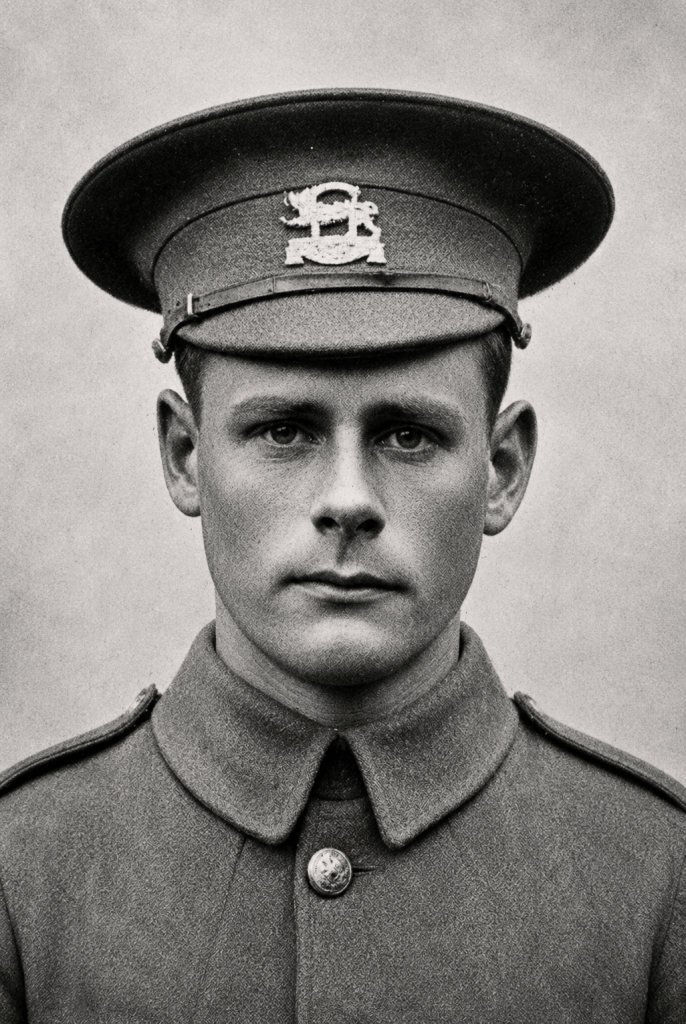
8th Leicestershire Regiment,
3 May 1917
Synopsis of Life and Military Service
Cecil Thomas Foister
Cecil Thomas Foister was born on 12 February 1894 at Goadby Marwood, Leicestershire, the third child and second son of Thomas Solomon Foister and Fanny Eyles or Foister, his older siblings being Sydney Ernest born 1886 and Christian Maud born 1886. He was baptised at Goadby Marwood parish church on 20 March 1894. His mother died when he was just over a year old, and he was subsequently brought up by his father, who remarried Hannah Foster or Hudson in the second quarter of 1897, who herself was a widow.
By the time of the 1911 census Cecil was working as an iron ore miner / Labourer, while his father was employed as an iron ore foreman in one of the quaries around Melton Mowbray. Cecil remained unmarried and had no children.
Prior to the war, Cecil was a member of Court of ‘AB Kettleby Reliance’ of the Ancient Order of Foresters one of the largest friendly societies in Britain. (see Remarks.)
When war was declared in August 1914, Cecil, although having no previous military experience, enlisted at Melton Mowbray on 2 September 1914 and was placed into the 8th (Service) Battalion, Leicestershire Regiment which was formed in the same month and attached to the 23rd Division. His service papers describe him as :-
- Occupation: General Labourer.
- Height: 5’6″.
- Weight: 135lbs.
- Chest: 35″ with 1″ expansion.
- Complexion: Fresh.
- Eyes: Grey.
- Hair: Brown.
- Religion: Church of England.
- Marks, Scars and Tattoos: None.
Cecil spent the early months of his service at Aldershot, England before going overseas. Following his training he left for the French and Flanders Theatre of War on 29 July 1915 along with his battalion.
In April 1915 the 8th Leicestershire Regiment transferred to 110th Brigade, 37th Division.
During his time with the battalion Cecil rose through the ranks. He was promoted to Lance-Corporal, unpaid, on 7 January 1917, became a paid Lance-Corporal on 29 January and was promoted to Acting Corporal on 21 April 1917. During this period, his battalion saw active combat during the Battle of the Somme (July – September 1916) including the Battle of Bazentin Ridge and the Battle of Morval.
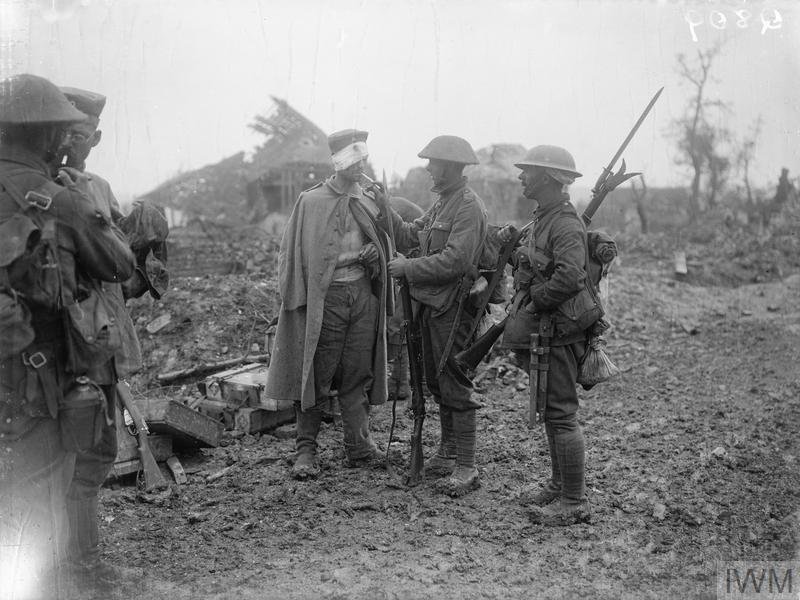
There are glimpses in the local newspapers of Cecil’s relationships with the men around him. In March 1916, the Melton Mowbray Times and Vale of Belvoir Gazette reported that Cecil and fellow soldier W. Pizer had written to the family of their comrade, Private Harry Botterill of the 8th Leicesters, reporting his death from a sniper’s bullet.
The report is particularly poignant because both Cecil and Pizer would later be killed themselves.
A Trusted and Respected Soldier
Cecil’s qualities as a soldier are perhaps best revealed in a letter written after his disappearance by Company Sergeant-Major E. Walker.
Writing from France on 8 May 1917, Walker told Cecil’s father of the circumstances surrounding his son’s disappearance. He explained that during the recent fighting approximately 200 men had become cut off from the rest of their forces. A German counter-attack had overwhelmed them, and although the men had fought bravely to regain their lines, it had been impossible to establish who had been killed and who had been taken prisoner.
Cecil was therefore reported missing, with the hope that he had survived as a prisoner of war.
But Walker’s letter contained much more than an explanation of Cecil’s fate. It provided a remarkable personal tribute to the young soldier.
“He was an excellent N.C.O., and was liked by everybody.”
Walker continued:
“He could always be trusted, and did most of our patrol work with great coolness and several times brought back valuable information.”
These words suggest that Cecil had become a trusted and dependable member of his battalion. Patrol work was dangerous, particularly when carried out close to enemy positions, and Walker’s description indicates the confidence placed in him by his superiors.
There had also been recognition of Cecil’s courage shortly before his death. Walker told his father:
“I am glad to say your son was recommended for some distinction for his coolness, and valuable information he went and got under terrific bombardment about a week or two ago, and I hope it comes through all right.”
The recommendation would never have the opportunity to become part of Cecil’s future. Within days he would be reported missing.
The Attack at Fontaine-lès-Croisilles
On 3 May 1917, Cecil took part in the attack towards Fontaine-lès-Croisilles during the Battle of Arras.
The 8th Leicesters were ordered to advance against the German positions, with the attack beginning at 3.45 am behind a creeping artillery barrage. The battalion war diary records that the conditions were extremely difficult. It was still dark, and smoke and dust from the British and German bombardments made it impossible for the men to see more than a few yards ahead.
The attack quickly became confused. Direction was lost and the line was forced to move to the right. By approximately 6.30 am it was clear that the attack had failed, while parts of the battalion had become surrounded and faced the prospect of being cut off.
The battalion remained under intense pressure throughout the day. Two tanks intended to assist the attack both broke down.
The casualties were severe:
19 killed
101 wounded
168 missing
3 died of wounds
Cecil was among the 168 men reported missing.
The circumstances described in the battalion war diary correspond closely with the account later given to Cecil’s father. Sergeant-Major Walker explained that the men who had become cut off had fought hard to escape:
“They fought with splendid pluck to get back but it was impossible.”
The Germans had overpowered the isolated group, leaving the battalion unable to determine which men were dead and which had been captured.
The uncertainty surrounding Cecil’s fate must have been agonising for his family.
Walker wrote:
“I do sincerely hope you hear from him as a prisoner.”
He also expressed his own personal sadness at the loss:
“I am deeply sorry to lose him.”
The letter was published in the Melton Mowbray Times on 18 May 1917, allowing the wider community to learn not only that Cecil was missing, but also something of the esteem in which he had been held by his comrades.
At that time there was still hope that he might have survived and been taken prisoner.
That hope was eventually lost.
Remembered at Arras and Goadby Marwood
Cecil is commemorated on the Arras Memorial, Pas de Calais, France, which remembers Commonwealth servicemen who died in the Arras sector and have no known grave.
His name was also preserved in the village where he was born. In October 1920, the Melton Mowbray Times and Vale of Belvoir Gazette reported the unveiling of a memorial tablet in Goadby Marwood Church to the men of the parish who had lost their lives during the war. Cecil Thomas Foister was among those remembered.
Cecil had entered the army in 1914 as a young labourer with no previous military experience. Less than three years later he had risen to the rank of Acting Corporal and had earned the trust and respect of the men around him.
His Company Sergeant-Major’s words provide a lasting picture of the man behind the military records: an “excellent N.C.O.”, liked by everybody, who “could always be trusted” and who carried out dangerous patrol work with “great coolness.”
Later military records established that Acting Corporal Cecil Thomas Foister was killed in action on 3 May 1917, aged only 23. His body was either never recovered or was unidentified and he has no known grave.
Family
Cecil Thomas Foister was born on 12 February 1894 at Goadby Marwood, Leicestershire. The following family information is taken from the 1891, 1901, 1911 Census and his Service Record. His family is shown as follows :-
- Father: Thomas Solomon Foister, born c.1859 at Goady Marwood, Melton, Leicester.
- Mother: Fanny Eyles or Foister, born c.1858 at Leicester.
- Step-Mother: Hannah Hudson or Foister, born c.1861 at Treswell, Notts.
- Brother: Sydney Ernest Foister, born c.1885 at Goadby, Leics.
- Sister: Christian Florence Foister or Barnard, born c.1887at Goadby, Leics.
- Sister: Elsie Maud Foister, born c.1895 at Goadby, Leics.
- Half Brother: Frederick William Foister, born c.1898 at Goadby, Leics.
- Half Brother: Percy Horace Foister, born c.1900 at Goadby, Leics.
- Half Brother: Albert Edward Foister, born c.1903 at Goadby, Leics.
Addresses
The following addresses have been ascertained for Alfred Campbell :-
- 1901: Goadby Marwood, Melton Mowbray, Leicestershire.
- 1911: Goadby Marwood, Melton Mowbray, Leicestershire.
Medals
Cecil Foister was awarded the 1914-15 Star, the Victory and the British War Medals for his service in the Great War.
Memorials
Cecil Foister is honoured and remembered on the following memorials :-
- St. Deny’s Church War Memorial, Goadby Marwood, Leicestershire.
- Ring of Remembrance Memorial, Ablain-Saint-Nazaire, France.
Remarks
The house in which the Foister family resided in Goadby Marwood is now called ‘The Paddock’.
(The A.B. Kettleby Reliance was a local branch, or “Court”, of the Ancient Order of Foresters (AOF), one of the largest friendly societies in Britain before the establishment of the welfare state and the NHS. The court was officially known as “Court AB Kettleby Reliance No. 7999.”
The initials “A.B.” almost certainly refer to Ab Kettleby, a village near Melton Mowbray in Leicestershire. The word “Reliance” was the chosen name of the court, reflecting the values of mutual support and self-help that were common among friendly societies.)
Links to Additional Information
- Commonwealth War Graves Commission: Cecil Thomas Foister.
- Find a Grave: (Arras Memorial) Cecil Thomas Foister.
- A Street Near You website: Cecil Thomas Foister.
- Lives of the First World War: Cecil Thomas Foister.
- Find a Grave: (Goadby Marwood): Cecil Thomas Foister.
References
- Commonwealth War Graves Commission.
- British Army Service Record. (Ancestry)
- 1891 Census. (Ancestry)
- 1901 Census. (Ancestry)
- 1911 Census. (Ancestry)
- Leicestershire Baptisms. (Find My Past)
- Goadby Marwood Burial Records. (Find My Past)
- Soldiers Died in the Great War. (Ancestry)
- Medal Index Card. (Ancestry)
- Pension Cards. (Western Front Association)
- Medal Roll: Victory and British War Medals: Leicestershire Regiment. (Ancestry)
- Medal Roll: 1914-15 Star: Leicestershire Regiment. (Ancestry)
- Register of Soldiers Effects. (Ancestry)
- Parish of Goadby Marwood Church War Memorial. (Ancestry: Family Tree)
- The Melton Mowbray Times and Vale of Belvoir Gazette dated 23 October 1914.
- The Melton Mowbray Times and Vale of Belvoir Gazette dated 24 March 1916.
- The Melton Mowbray Times dated 18 May 1917.
- The Melton Mowbray Times and Vale of Belvoir Gazette dated 1 October 1920.
- War Diary: 8th Leicestershire Regiment for 3 May 1917.
Groups
Contributors:- Vincent Stuart (Main Story)

