1st Rifle Brigade,
26 April 1915
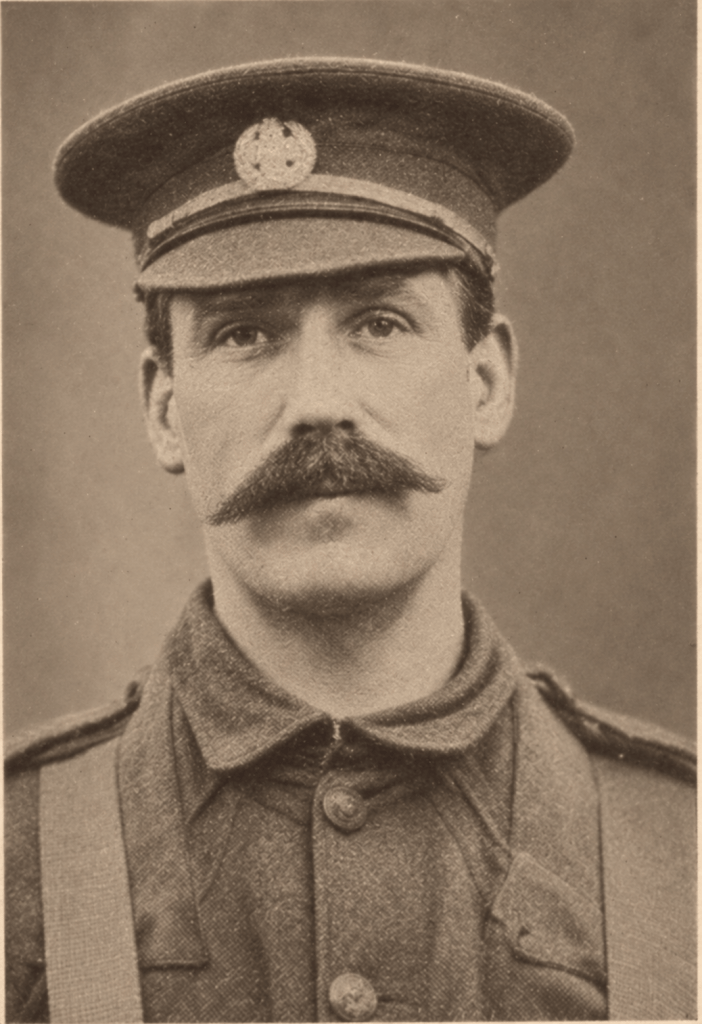
Synopsis of Life and Military Service
John Henry Rosenbrock was a husband, father and Salvation Army musician whose experiences of the First World War were recorded in a diary and shared through contemporary newspaper and Salvation Army reports. Called back to military service in August 1914, he endured the early campaigning and months of trench warfare, finding opportunities to comfort his comrades even under fire.
Family and Life Before the War
John was born on 12 May 1886 at 1 Hale Street, Poplar, London. He was the son of Peter Henry Rosenbrock (See notes on his father below), a cabinet maker, and Harriet Jones, who married on 2 August 1885. Little is known about his early childhood, although he appears to have been the eldest of four children. His marriage was registered in the West Ham district during the third quarter of 1907. His wife is recorded as Margaret Clarke Amelia Rosenbrock. They had two children: John Benjamin, born on 3 December 1908, and Olive May, born on 21 June 1911.
The Salvation Army played an important part in his life. He had been associated with its Manor Park corps, where he played in the band alongside a lifelong friend, later Sergeant Saunders of the Royal Garrison Artillery. Saunders subsequently recalled that John had led him to the penitent form as a boy, encouraging him in his faith.
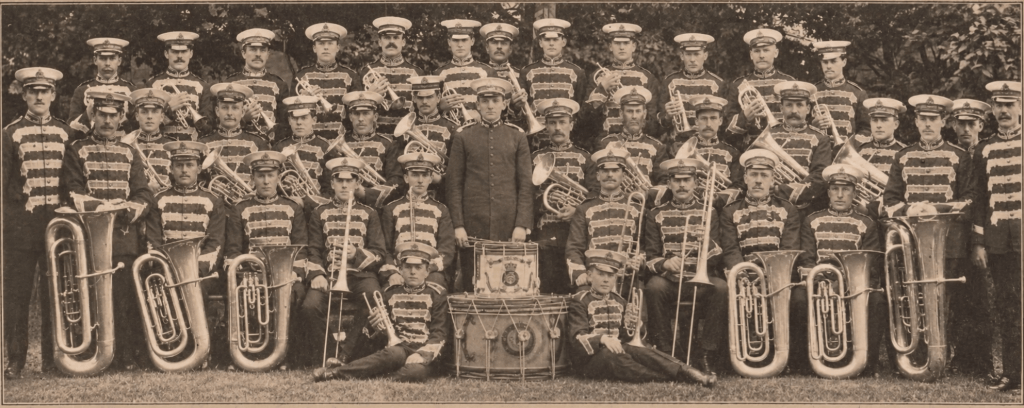
By the outbreak of war, John was Deputy Bandmaster of the Southend I corps and a solo cornet player. A report published in December 1914 stated that he had belonged to the Southend band for six and a half years.
Called Back to Service
John was an Army reservist and was called up on 5 August 1914, the day after the declaration of war on Germany. His enlistment is recorded at Stratford, Essex, and he served with the 1st Battalion, Rifle Brigade. His medal index card records his entry into the France and Flanders theatre of war on 23 August 1914.
Contemporary accounts described his experiences under the heading “From Mons to Ypres”. During the early campaigning and retreat, he and his comrades were repeatedly soaked by rain and took whatever opportunities they could to dry their clothing. At one farmhouse, built around a central manure pit, the men made a large bonfire and dried their clothes in turns, half a company at a time.
Throughout his service, John kept a detailed diary. When he brought it home on leave in February 1915, its cover still bore the mud of the trenches. The Southend Telegraph praised the care with which it had been compiled, noting that alongside the main events he recorded small incidents that might otherwise have escaped notice. It covered the period from mobilisation to 1 February 1915, when he sailed for England.
Faith in the Trenches
An early message from John was reported in The War Cry on 19 September 1914. In a postcard written at the roadside on 5 September, he reassured his Salvation Army comrades at Southend that all was well with him.
John remained closely connected to his Salvation Army comrades at home. The War Cry of 10 October 1914 reported that the Southend commanding officer had received a postcard from him saying that he was well and that, even in battle, he found opportunities to practise his Christian faith.
Later reports described him conducting prayer meetings in trenches filled with mud and slush, sometimes kneeling in waterlogged conditions a foot or more deep. He spoke with his fellow soldiers about their fears and beliefs, encouraged men seeking spiritual comfort and helped the wounded.
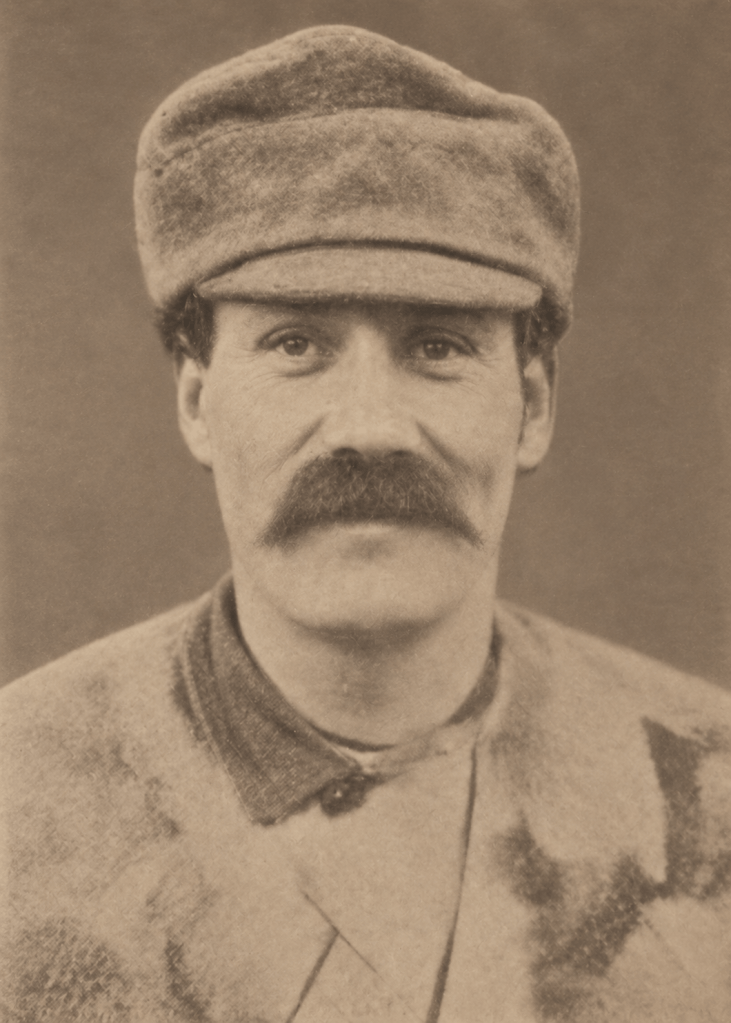
One incident recalled in February 1915 concerned an officer who approached him during a particularly heavy bombardment. Overwhelmed by the strain, the officer admitted that he felt close to screaming and said that he had prayed more that day than ever before. John listened and offered encouragement. Such accounts show the trust that some of his comrades placed in him amid the pressures of life under fire.
Comradeship and Loss
John’s recollections also revealed the personal losses behind the larger story of the campaign. Soldiers commonly paired up with a “mucking chum”, sharing food and looking after one another. John said that successive companions had been killed or wounded, eventually leaving him on his own.
He was particularly distressed by the death of an Irish friend who often reminded him to think of his wife and children and avoid unnecessary risks. While they were occupying different points in a trench, John found a position from which he could see the enemy clearly and called his friend over. The man was killed while moving towards him. John felt indirectly responsible, and the incident remained a painful memory.
Not all his recollections were of fighting. He described the slow business of cooking over charcoal and an occasion when, without any available, he used four candles pushed into the mud to heat bacon in an empty bully-beef tin. The candles had to be replaced before the meal was ready, and the cooking took about three hours.
He also spoke of dangerous night-time listening patrols, when selected men crawled beyond their trenches to discover what the enemy was doing, and of collecting food from fields and orchards with the owners’ permission, sometimes under fire.
The suffering of civilians affected him deeply. He recalled refugees fleeing with inadequate clothing, sometimes without boots or shoes, and described their misery as something that haunted the men who witnessed it. In contrast, he remembered the relief of people greeting British troops. On one occasion, two English women and a young girl were found weeping on a doorstep; enquiries revealed that their tears were tears of joy.
The Christmas Truce
The account published in February 1915 stated that John was among the British soldiers who briefly fraternised with German troops at Christmas. He recalled enthusiastic handshakes between the trenches and the goodwill of that extraordinary meeting.
It was a short respite. His account also acknowledged that fighting resumed afterwards, in some places more fiercely than before. For John, the memory of meeting the men on the opposite side formed another striking episode in his record of the war.
A Brief Return to Southend
In February 1915, John was granted eight days’ leave because Margaret was seriously ill. The Southend corps officer, named in the reports as Adjutant Devlyn, had intervened to secure his return, believing it essential that he should be brought to his wife’s bedside.
His arrival was marked by a welcome meeting at the Salvation Army Citadel. John spoke about his experiences at the front, and the Mayoress, who attended, shook hands with him and spoke to him afterwards. His Salvation Army friends gathered around him with good wishes for his safe return.
During the weekend he attended meetings in Salvation Army uniform. The corps band also played outside the Palace Hotel, where wounded soldiers were being accommodated.
His departure was remembered with particular feeling. After saying goodbye to the congregation on Sunday evening, he was seen off at the station by a small group who assembled at 4.45 in the morning. Lieutenant-Colonel Holmes prayed for him before he returned to the front. Those present did not know that this would be their last farewell.
April 1915: The Fighting Near Ypres
The 1st Rifle Brigade’s war diary records the conditions faced by the battalion immediately before John’s death.
At 6 a.m. on 25 April 1915, the men marched to huts at Vlamertinghe, (now Vlamertinge). That evening they moved through the area north of Ypres towards St Jean, intending to relieve troops of the 2nd Canadian Brigade. Unable to obtain definite information about their position, the battalion continued along the heavily shelled Wieltje–Fortuin road, with intervals between platoons, companies and battalions.
On reaching Fortuin, they turned south and were eventually guided to Hill 37, where large dugouts had previously been constructed by French troops. They took shelter shortly before daylight on 26 April. Two companies of the Somerset Light Infantry were on their right, but the battalion initially had no contact with troops on its left.
After dawn, men of the Durham Light Infantry passed back through their position. British troops were also observed in trenches near the Fortuin road, and a platoon was sent out to establish contact.
The diary records that shelling “began in earnest soon after dawn and lasted all day”. German troops were seen moving over the Gravenstafel Ridge into the Haanebeeke Valley, although they did not advance further. The battalion suffered 103 casualties that day, and the shelling continued through much of the night.
John Henry Rosenbrock was killed in action on 26 April 1915. The war diary describes the conditions that day, but the available records do not establish the precise circumstances of his death. He may have been killed during the bombardment, although this cannot be confirmed. The following day brought further heavy shelling and approximately 60 additional casualties within the battalion.
Southend in Mourning
News of John’s death reached a Salvation Army community already grieving losses at home. A Zeppelin raid on Southend had killed Mrs Whitwell, one of the corps’ oldest members, and severely injured her husband. A report in The Bandsman, Local Officer and Songster on 22 May 1915 described the shock of learning, soon afterwards, that their Deputy Bandmaster had also been killed.
An officer writing to the corps about John’s death described him as “one of the best men in the Regiment”.
A joint memorial service for John and Mrs Whitwell drew a large congregation to the Southend Hippodrome. Before the service, an open-air gathering was held opposite the Technical School. The band played “Promoted to Glory”, and the songsters sang “Songs of Heaven”. The report stated that thousands watched the slow procession to the Hippodrome, with men uncovering their heads as the band played the “Dead March”.
At the service, Sergeant Saunders paid tribute to his lifelong friend and their shared years as Salvation Army bandsmen. Drummer Hedger, described as the last comrade to see John off on his return to the front, also spoke in his memory.
Remembering John
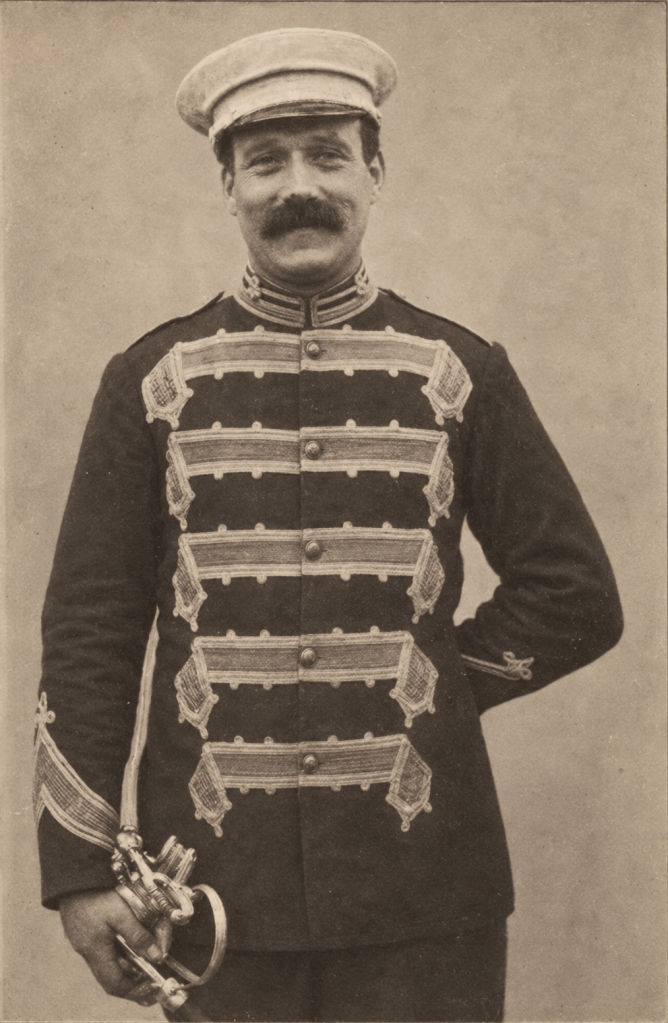
John left Margaret and their two young children. His son John Benjamin was six years old, and Olive May was three. The Register of Soldiers’ Effects records Margaret as the sole legatee of the money outstanding to him.
John Henry Rosenbrock’s body appears never to have been recovered or, if recovered, remained unidentified. He is therefore honoured and remembered on the Ypres (Menin Gate) Memorial in Belgium.
The surviving reports preserve more than his military service and death. They show a musician and family man who shared his comrades’ hardships, grieved for lost friends, cared about displaced civilians and drew on his faith to offer comfort in the trenches. At Southend, he was remembered both for his place in the band and for the influence he had on the people around him.
War Diary of the 1st Rifle Brigade April 1915
The following is an extract of the above diary for the 25th to 27th April 1915 :-
25 April 1915 – 6am – Marched to huts at VLAMERTINGHE (now Vlamertinge).
6pm – Marched via stone bridge just north of YPRES to ST JEAN and halted while an attempt was made to discover where 2nd CANADA BRIGADE from whom we were to take over were. No definite news obtainable, so marched on (25 yards interval between platoons, 50 yards between Companies, 100 yards between battalions) along WIELTJE – FORTUIN road which was being fairly heavily shelled.
26 April 1915 – On arriving at FORTUIN, turned off road to south, and guided by Brigade Major 2nd CANADA BRIGADE eventually reached hill 37, which had some large dug outs constructed by the French on it. Sheltered in here just before daylight with 2 Companies SOM. L. I. (Somerset Light Infantry) on our right and in touch with nothing on our left. As soon as it was daylight found some D.L.I. (Territorials) (Durham Light Infantry) returning through us. Also saw some trenches on our left on FORTUIN road about 1,000 yards East of FORTUIN, occupied by British troops. Pushed one platoon out to try and get touch with them. Shelling began in earnest soon after dawn and lasted all day. Saw Germans come over GRAVENSTAFEL ridge and down into HAANEBEEKE valley, but they did not push on. Casualties 103. Shelling continued most of the night.
27 April 1915 – Shelled most of the day, but had improved trenches. Casualties about 60. In the evening sent patrols out to secure line of FORTUIN – MESSELMARKT road, from cross roads about ¾ mile East of FORTUIN to HAANEBEEKE. Found farms just East of cross roads strongly held so returned. Idea was to have dug in along line of road, thus joining up with the left of HANTS (Hampshire Regiment) on HAANEBEEKE and right of E. YORKS (East Yorkshire Regiment) on cross roads.
Family
John Henry Rosenbrock was born on 12 May 1886 at 1 Hale Street, Poplar, London. The following family information is taken from the 1891, 1911, 1921 Census and Pension Cards. His family is shown as follows :-
- Wife: Margaret ‘Minnie’ Foskett, born 23 Septrmber 1884 at Limerick, Ireland.
- Son: John Benjamin, born 3 December 1908 at Prittlewell, Southend.
- Daughter: Olive May, born 21 June 1911 at Prittlewell, Southend.
- Father: Peter Henry, born c.1865 at Hannover, Germany. (Cabinet Maker)
- Mother: Harriet Jones or Rosenbrock, born c.1866 at St. Lukes, London.
- Brother: Edward J., born c.1889 at Poplar, London.
- Sister: Mary C., born c.1889 at Poplar, London.
- Brother: Henry Frederick, born c.1890 at Bromley by Bow, London.
Addresses
The following addresses have been ascertained for John Rosenbrock :-
- 1890: 38 Broomfield Street, South Bromley, London.
- 1891: 13 Latham Street, Poplar, London.
- 1892: 196 Cable Street, Tower Hamlets, London.
- 1901: 367 Dersingham Road, Little Ilford, East Ham, Essex.
- 1911: 2 Marlow Villas, Hartington Road, Southend-On-Sea, Essex.
- 1915: Clarence Road, Southend.
Following his death, records later give Margarets addresses as :-
- 3 Hamburgh Terrace, Lambert Street, Southend.
- 1927: 40 Maldon Road, Southend.
Medals
John Rosenbrook was awarded the 1914 Star, Victory and the British War Medals for his service in the Great War.
Memorials
John Rosenbrock is honoured and remembered on the following memorials :-
- Southend Salvation Army: The Citadel, 42, Clarence Street, Southend On Sea, Essex.
- Southend Roll of Honour: Prittlewell Priory Refectory, Prittlewell Park, Victoria Avenue, Prittlewell, Southend On Sea, Essex.
Remarks
In many of his military documents, his surname is shown as Rosenbrook, however the correct spelling is Rosenbrock.
The 8 June 1929 edition of the Salvation Army’s The Musician includes a photograph of the Southend I Salvation Army Band. One of the bandsmen is identified as J. Rosenbrock. Although clearly not John Henry, he may well be his son, John Benjamin Rosenbrock.
During my research, I found an Army service record for a John Henry Rosenbrock, born in Ilford, Essex, who enlisted in the 5th Rifle Brigade in July 1904. I initially believed this to be the same man, but the final page named his mother as Annie. This discrepancy raised sufficient doubt about his identity for me to exclude the record from the main account of his life.
John’s father, Peter, is recorded on the Commonwealth War Graves Commission website as Peter Harry Rosenbrock. However, his marriage certificate gives his middle name as Henry, while his signature on the same document reads Peter Heinrich Rosenbrock. This suggests that the middle name Harry in the CWGC record is incorrect.
Links to Additional Information
- Commonwealth War Graves Commission: John Henry Rosenbrock.
- Find a Grave: John Henry Rosenbrock.
- A Street Near You website: John Henry Rosenbrock.
- Lives of the First World War: John Henry Rosenbrock.
Groups
Contributors
- Vincent Stuart (Main Story)
References
- Commonwealth War Graves Commission.
- 1891 Census. (Ancestry)
- 1911 Census. (Ancestry)
- 1921 Census. (Ancestry)
- Soldiers Died in the Great War. (Ancestry)
- Medal Index Card. (Ancestry)
- Pension Cards. (Western Front Association)
- Register of Soldiers Effects. (Ancestry)
- Medal Roll: Rifle Brigade – British and Victory Medals. (Ancestry)
- Medal Roll: Rifle Brigade – 1914 Star. (Ancestry)
- Civil Register of Marriages 1907. (Ancestry)
- The Bandsman, Songster, and Local Officer dated 13 February 1915, page 105.
- The Bandsman, Songster, and Local Officer dated 20 February 1915, page 117.
- The Bandsman, Songster, and Local Officer dated 22 May 1915, page 329.
- The Bandsman, Songster, and Local Officer dated 3 April 1915, page 215.
- Musician of the Salvation Army, dated 8 June 1929, front page and page 184.
- War Cry, dated 10 October 1914, page 5.
- The Bandsman, Local Officer and Songster, dated 26 December 1914, page 823.
- Civil Register of Births: 1886. (Ancestry)
- War Cry, dated 19 September 1914, page 5.
- Southend Standard, dated 11 November 1915, page 4.
- Baptism Records South Bromley, London, 1890, page 77 (For Henry F.)
- St. John The Baptist, Hoxten, Hackney, Marriage Records. (For his mother and father)
- London School Admissions. (Ancestry)

