13th Royal Scots, 23rd April 1917
Synopsis of Life and Military Service
Early Life
Andrew Alexander Cameron Adam was born at White Inch, Seapark, Kinloss, Moray on 25 January 1881. He was the first son born to Andrew Adam, a farm servant, and Mary Cameron. However, his arrival was over-shadowed by immediate tragedy as just two days after giving birth, his mother died aged twenty-six. Left motherless, Andrew and his older sisters were raised in Kinloss by their maternal grandmother, Isabella Cameron, while their father continued working as an agricultural labourer. Andrew’s early years were shaped by the rural life of Morayshire, an area of small farms and fishing villages.
His father eventually remarried, and in 1891, with his second wife, Elizabeth Farquhar, the expanded family had settled at Meadowhillocks Farm in Duffus. When he finished school, Andrew embarked on a trade that would define his young adulthood, serving an apprenticeship as a gardener.
Sorrow was to hit Andrew again in 1907, when his father Andrew died, aged fifty-two. Seeking employment as a qualified gardener took Andrew away from Moray. On 2 July 1909, he married Dinah Muirhead in the parish of Craigie, Dalmeny. The newlyweds moved to Argyll, living briefly in Dunoon before settling in the grounds of Ardencaple Castle in Helensburgh, where Andrew worked as a gardener.
Early Military Career
Prior to the outbreak of the First World War, Andrew spent a brief period serving with the Cameronians (Scottish Rifles) under Service Number 20070. This early military engagement was likely a period of Territorial Force training or home defence service prior to 1914.
The Royal Scots – 13th Battalion on the Western Front
In 1916, at the age of 35, Andrew re-enlisted at Helensburgh, Dunbartonshire. He was assigned to the 13th (Service) Battalion, The Royal Scots (Lothian Regiment) — famously nicknamed “Pontius Pilate’s Bodyguard” due to their standing as the oldest infantry regiment in the British Army. Issued with the service number 41124, Private Adam joined his battalion in France as part of the 44th Brigade, 15th (Scottish) Division.
During the grueling summer of 1916, Private Adam arrived in France and, in August, the 13th Royal Scots moved into support positions at Contalmaison during the Battle of the Somme.
On 15 September 1916, Andrew’s battalion participated in a major assault on the German lines in front of Martinpuich. Moving forward at dawn, following a heavy artillery bombardment, the 13th Royal Scots caught the defenders by surprise, capturing nearly 200 prisoners including a battalion commander and his adjutant and securing their objective at “Push Trench.”
Yet the apparent success came at a terrible cost. The battalion suffered hundreds of casualties, including nine officers wounded and 263 other ranks killed, wounded or missing. After further turns in the mud and freezing rain of the Somme front, the division was pulled back in mid-October as winter set in.
In the spring of 1917, the 15th Scottish Division was deployed to the Arras sector for a major new Allied offensive.
On the morning of 9 April 1917, the Battle of Arras began under cover of a massive rolling artillery barrage. Assembly was meticulously planned. Private Adam and his comrades moved up from underground cellars beneath the Grande Place in Arras, advancing through a covered sewer system to reach their jump-off points.
Attacking south of the River Scarpe, the 13th Royal Scots cleared fierce resistance at the village of Blagny by 9 o’clock in the morning, using Stokes mortars and grenades, before pressing onward to Feuchy and the Railway Triangle. Over four days of relentless blizzard conditions, heavy snipers, and counter-artillery, the battalion advanced over five miles.
The initial success of the Battle of Arras, however, could not be sustained indefinitely. Poor weather, German resistance and the wider failure of the French offensive meant that the British continued offensive operations even after the opportunity for major gains had diminished.
The British High Command renewed attacks on 23 April 1917 — the opening day of the Second Battle of the Scarpe. The 13th Royal Scots were ordered to assault a heavily fortified German defensive line near Monchy-le-Preux, centring on the villages of Guemappe and Roeux and focusing on a communication trench sector designated “Dragoon Lane” near the Cambrai Road.
The 13th Royal Scots advanced under extremely difficult conditions. Heavy German fire checked the advance in places, and the battalion suffered severely. In the chaos of the bombardment, command structures broke down as shells tore through the assembly trenches.
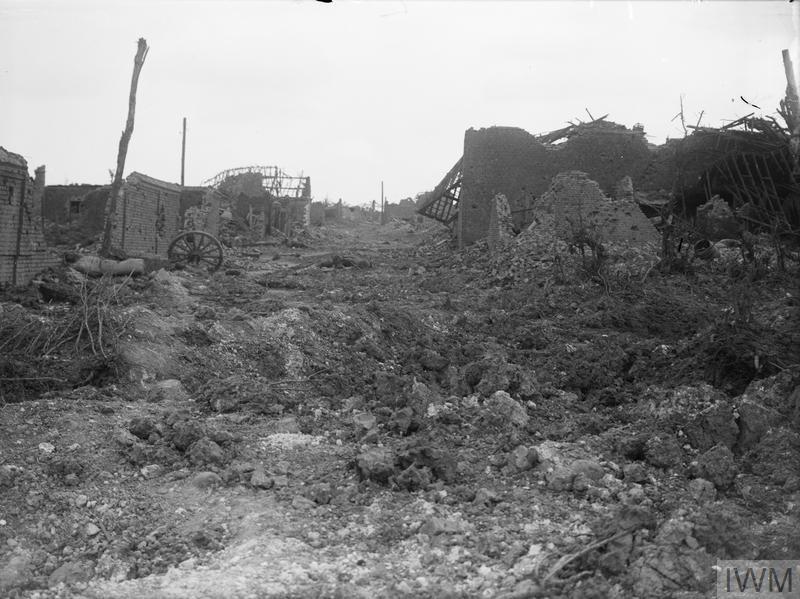
Private Andrew Alexander Cameron Adam was killed in action during the assault on Dragoon Lane on 23 April 1917, aged 36. The operational severity of the day was devastating to the unit and the 13th Royal Scots suffered over 270 casualties on 23 April alone. By the time the remnants of the battalion were relieved days later, single companies had been reduced to as few as 17 surviving men led by a single Lance Corporal.
This detail is particularly poignant when read alongside the surviving account of Private A. Clark of the 13th Royal Scots. Clark described the German bombardment on 23 April, being buried by a shell, becoming separated from his company, and eventually finding himself assisting wounded men while the battalion around him suffered enormous losses.
The experience of Clark cannot, of course, be presented as Andrew’s. There is no surviving personal account from Andrew describing his final hours. But Clark’s testimony provides a vivid contemporary picture of the circumstances in which Andrew and his comrades were fighting: the intense artillery fire, shattered communications, men buried by shells, units becoming intermixed and soldiers attempting to find their comrades amid the chaos.
Andrew’s death therefore came, not in an isolated incident, but during a major battalion attack in which the 13th Royal Scots were subjected to some of the most intense fighting of the Arras offensive.
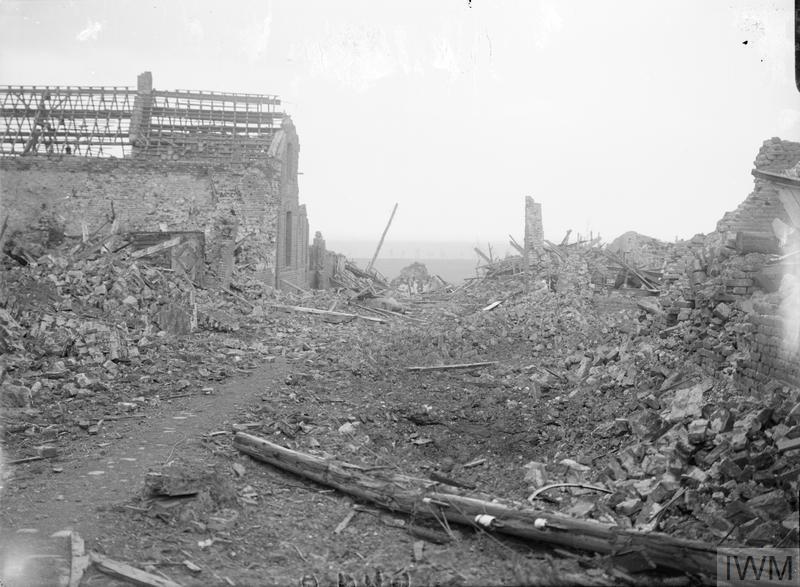
Pontius Pilate’s Bodyguard
The history of the Royal Scots gives an insight into the character and reputation of the 13th Battalion. The battalion was associated with the title “Pontius Pilate’s Bodyguard”, a nickname reflecting the long-standing tradition and identity of the Royal Scots and the distinctive history of the regiment.
The regimental history also records the battalion’s experiences during the Somme and Arras campaigns, providing a valuable context for Andrew’s service. These accounts are more than a chronology of military movements: they reveal the extraordinary conditions in which ordinary soldiers were expected to operate.
The men of the 13th Royal Scots moved repeatedly between front-line trenches, support positions and billets. They worked under artillery fire, endured mud and cold, carried ammunition and supplies, repaired trenches and prepared for attacks. When ordered forward, they advanced across ground swept by machine guns, rifles and artillery. Andrew was one of these men.
His surviving records do not allow us to reconstruct every day of his military service. Nevertheless, the combination of his enlistment records, regimental history and the history of the 13th Royal Scots allows us to place him firmly within the battalion’s wartime story.
Family Sacrifice
Andrew’s death left a profound hole in his family. His young widow, Dinah, remaining in Scotland for three years after the war, eventually emigrated to Canada in 1920. She remarried on 4 July 1921, marrying Frederick Bridle in New Westminster, British Columbia.
The Adam family paid a heavy price during the Great War. Andrew’s half-brothers both served with distinction on the front lines. Private William John Adam (6th Battalion, Seaforth Highlanders) was wounded in combat and awarded the Military Medal (MM) for bravery.
Corporal Gordon Adam (4th Field Ambulance) enlisted in Canada, was Mentioned in Despatches, and was also awarded the Military Medal (MM). Tragically, Gordon was killed in action on 6 November 1917 near Poperinge, Belgium, during the Battle of Passchendaele.
The story of Andrew Adam therefore belongs within a wider family history of military service and sacrifice.
Remembrance
Andrew’s body was never recovered. Like thousands of other men who died during the Arras fighting, he has no known grave. He is commemorated on the Arras Memorial, Pas de Calais, France, where his name appears on Bay 1 and 2, which honours over 35,000 British, South African, and New Zealand soldiers who fell in the sector with no known grave.
His name is also commemorated closer to home on two civic monuments, the Helensburgh War Memorial and the Cummingston War Memorial, linking his wartime service to both the Moray communities from which he came and the community in which he made his home.
The Royal Scots’ own historical records preserve another important part of his identity: Private Andrew Alexander Adam, No. 41124, born in Kinloss, serving with the 13th Battalion and killed on 23 April 1917.
Andrew’s story began in the quiet rural landscape of Kinloss and Moray. He became a gardener, married Dinah Muirhead and established a home and career in Helensburgh. Then, in his mid-thirties, he entered military service. His journey from civilian life to the Scottish Rifles, and then to the 13th Royal Scots, took him into the heart of the fighting on the Western Front.
He survived the training and transfer process, served with a battalion that had already endured the Somme, and took part in the opening stages of the Battle of Arras. On 23 April 1917, his military service ended amid the fierce fighting of the Second Battle of the Scarpe. He was 36 years old.
More than a century later, Andrew Alexander Cameron Adam remains remembered not simply as a name on a memorial, but as a man whose life carried him from a farm community in Moray to the battlefields of France. His military service was brief in years, but intense in experience.
The surviving records allow us to follow that journey, from Scottish Rifles, Private, 20070 in June 1916, to 13th Royal Scots Private 41124, and finally to one of the missing of Arras. His name, preserved on memorials in France and Scotland, remains a lasting record of that journey and of the sacrifice made by Andrew Adam and so many others of his generation.
Family
Andrew Alexander Cameron Adam was born on 25 January 1881 at White Inch, Seapark, Kinloss.
The following family information has been ascertained from several soources including the 1891, 1901, 1911 Census and his Pension Card :-
- Wife: Dinah Muirhead or Adam, botn 18 Aug 1884 at Loanhead, Midlothian. (d.1958)
- Father: Andrew Adam, born 18 August 1856, Elgin, Moray. (d.31/10/1907)
- Mother: Mary Cameron or Adam, born 15 Jan 1855 at Dallas, Moray. (d.27/1/1881)
- Sister: Maggie, born 19 Dec. 1876 at Dallas, Moray.
- Sister: Mary Ann., born 21 Jan.1879 at Duffus, Moray.
- Half-Brother: James Cameron, born 25 Aug. 1875 at Dallas, Moray.
- Half-Sister: Ethelreda, born 22 Oct. 1882 at Duffus, Moray. (d.16/8/1963)
- Half-Brother: William, born 31 March 1884 at Duffus, Moray.
- Half-Sister: Lizzie Jane, born 7 Nov. 1885 at Duffus, Moray.
- Half-Brother: James, born 20 October 1887 at Duffus, Moray.
- Half-Brother: Gordon, born 3 September 1889 at Duffus, Moray. (d.6/11/1917)
- Half-Sister: Isabella, born 29 October 1892 at Duffus, Moray.
- Half-Brother: William John, born 6 April 1895 at Duffus, Moray.
- Half-Sister: Jeanie Gordon, born 17 Dec. 1902 at Duffus, Moray. (d.22/9/1979)
Addresses
The following addresses have been ascertained from the 1891, 1901, 1911 Census,
Valuation Rolls and his Pension Card:-
- 1881: White Inch, Seapark, Kinloss, Moray.
- 1891: Meadowhillock, Duffus, Moray.
- 1901: Meadowhillock, Duffus, Moray.
- 1911: Abbey Hill Cottages, Dunoon, Argyll.
- 1915: The Lodge, Ardencaple Castle, Helensburgh, Dunbartonshire.
Medals
Andrew Alexander Adam was awarded the Victory and the British War Medals for his service in the Great War.
Memorials
Andrew Alexander Adam is honoured and remembered on the following memorials :
- Keam Public School War Memorial, Duffus Kirk, Hopeman Road, Duffus, Moray.
- Cummingston War Memorial, Main Street, Cummingston, Moray.
- Helensburgh War Memorial, Hermitage Park, Helensburgh, Dunbartonshire.
- Scottish National War Memorial, Edinburgh Castle.
Links to Additional Information
- Commonwealth War Graves Commission: Andrew Alexander Adam.
- Find a Grave: Andrew Alexander Adam.
- A Street Near You: Andrew Alexander Adam.
- IWM Lives of the First World War: Andrew Alexander Cameron Adam.
- Libindx: Andrew Alexander Adam.
- Morayshire Roll of Honour.
References
- Pension Card. (Western Front Association)
- Register of Soldiers Effects (Ancestry).
- The Morayshire Roll of Honour 1914 – 1918.
- Pontius Pilate’s Bodyguard Volume 1.
- 1881 Census.
- 1891 Census.
- 1901 Census.
- 1911 Census.
- Pension Card.
- Soldier Died in the Great War. (Ancestry)
- Medal Index Card. (Ancestry)
- Medal Roll: Royal Scots – British War and Victory Medals. (Ancestry)
- Register of Soldiers Effect. (Ancestry)
Groups
Contributors:-
- Paula Menzies-Smyth (Main Article)

